What to see at the Château du Clos de Vougeot: the room-by-room tour
The courtyard of honor
You enter through the courtyard, and this is where most visitors realize they are not in a pleasure palace. The building is a Cistercian agricultural tool to which a Renaissance manor was added in 1551. Both eras face each other in the same courtyard: the utilitarian stone of the monks on one side, the façade of the 48th Abbot of Cîteaux, Dom Jean Loisier, on the other. I recommend staying for two minutes in the middle before following the signs: it is the only place from which you can take in the whole.
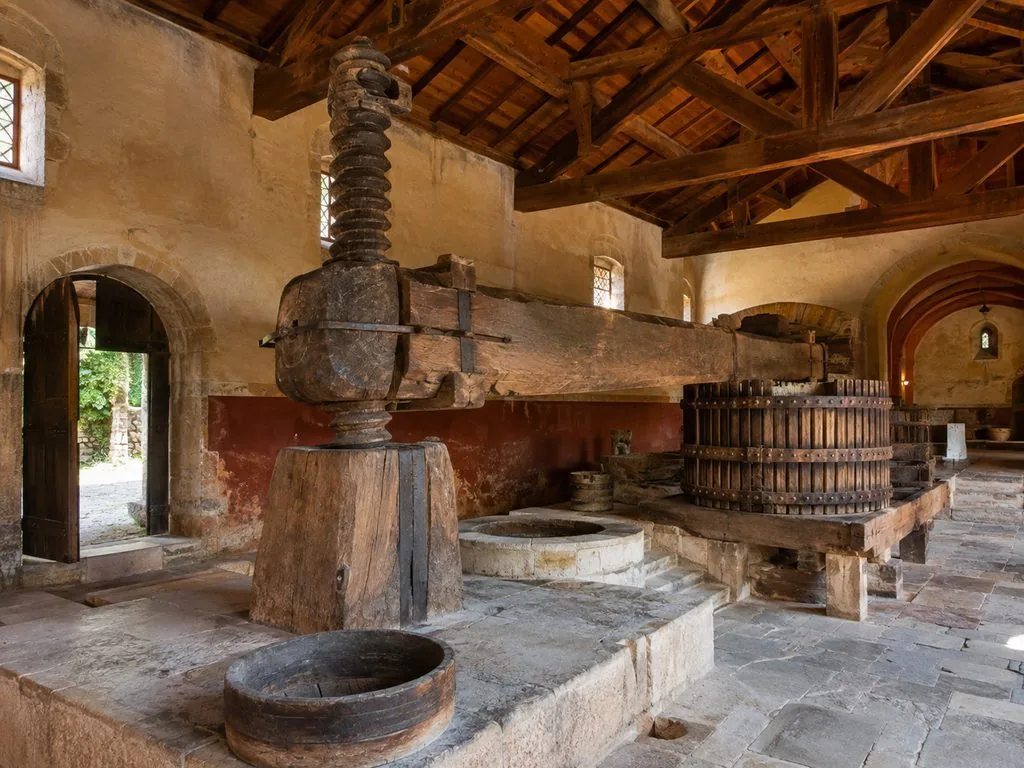
The winery and the four presses
This is the room people come to see. The winery dates from the 12th century, it is built in the shape of a cloister, and it houses four monumental screw presses in oak. Each could press four tonnes of grapes. When I first started guiding here, I made the classic beginner’s mistake: talking about the wood. What you should look at is the screw and the capstan, that is, the mechanics, and the men it took to turn them. Once you realize that these four machines processed the harvest of a clos of fifty hectares, the room takes on a different scale.
The Grand Cellar
Vaulted, also from the 12th century, the Grand Cellar could hold two thousand barrels of wine. Today, it is the room where the Confrérie des Chevaliers du Tastevin holds its chapters: the long tables you see in photos are here. The Confrérie was founded in 1934 in Nuits-Saint-Georges, in the midst of a wine crisis, and today has around twelve thousand active members worldwide. Its history is detailed on the nine centuries of the clos.
The lay brothers' dormitory
Go upstairs and look up. The 14th-century oak roof frame is, in my opinion, the most beautiful thing in the building—more so than the presses, which everyone photographs. The lay brothers were the secular brothers who worked the vineyards; this dormitory was their floor. It is also one of the rooms that most often closes during private events, along with the kitchens. If it matters to you, avoid Saturdays.
The kitchens and the Renaissance wing
Loisier had the courtyard of honor, the kitchens, and the well built in 1551. The kitchens give a very concrete idea of what hosting meant here: fireplaces on the scale of a community, not a family. The well, in the courtyard, is often the best photo frame of the château in the late afternoon, when the light falls on the west façade.
The Small Cellar and the film
The Confrérie’s film, “Never in vain, always in wine,” is shown in the Small Cellar, in French and English. It is short enough to hold a child’s attention and explains better than any sign what these initiation dinners are. It is also the Confrérie that launched the Saint-Vincent tournante, the festival that moves to a different village each late January.
The gift shop and exhibitions
The tour ends at the gift shop. The château no longer produces wine, so what you find here is more about books, objects, and souvenirs than bottles from the estate. Temporary exhibitions occupy some rooms depending on the season; they are not announced far in advance, so it’s best to check the official website.
Do the tour in reverse if you arrive at opening time: winery first, film last. Groups all start with the courtyard and the winery around 10:30, and you will have the presses to yourself for twenty minutes.
What may be closed
I prefer to say this before you make the trip. The Renaissance kitchens and the dormitory may be closed during private events, especially on Saturdays, and on a Saturday with an event, the château closes at 17:00 with the ticket office closing at 16:30. Full opening hours are on opening hours and tickets. The rest of the tour remains open all year.
And the clos itself?
The vineyard is not included in the ticket. The clos consists of about fifty hectares in one piece, enclosed by walls, shared among more than eighty owners and operators. It can be seen very well from the road and from the surroundings of the château; to walk inside and understand the division of the plots, you need a tour that enters the vineyards. I explain the wine on the grand cru page and the options on all visits.
See the château from the inside, then have lunch
A guided tour followed by a four-course lunch at La Table de Léonce, inside the château itself, with four Burgundy wines including two premier crus selected by the Confrérie. Three hours, maximum ten people.
Frequently asked questions
How many presses are there at Clos de Vougeot?
Four, monumental, screw presses in oak, in the 12th-century winery built in the shape of a cloister. Each could press four tonnes of grapes.
Can you see the Grand Cellar?
Yes, it is part of the tour. It is the vaulted room from the 12th century that could hold two thousand barrels of wine and where the Confrérie holds its chapters: see the history of the clos.
Can some rooms be closed?
Yes: the Renaissance kitchens and the lay brothers' dormitory sometimes close during private events, especially on Saturdays. The times and days to avoid are on opening hours and tickets.
How long does it take to see everything?
About one hour for a self-guided tour, including the film, and one and a half to two hours with a guided tour and the gift shop. Details on how long it takes.